
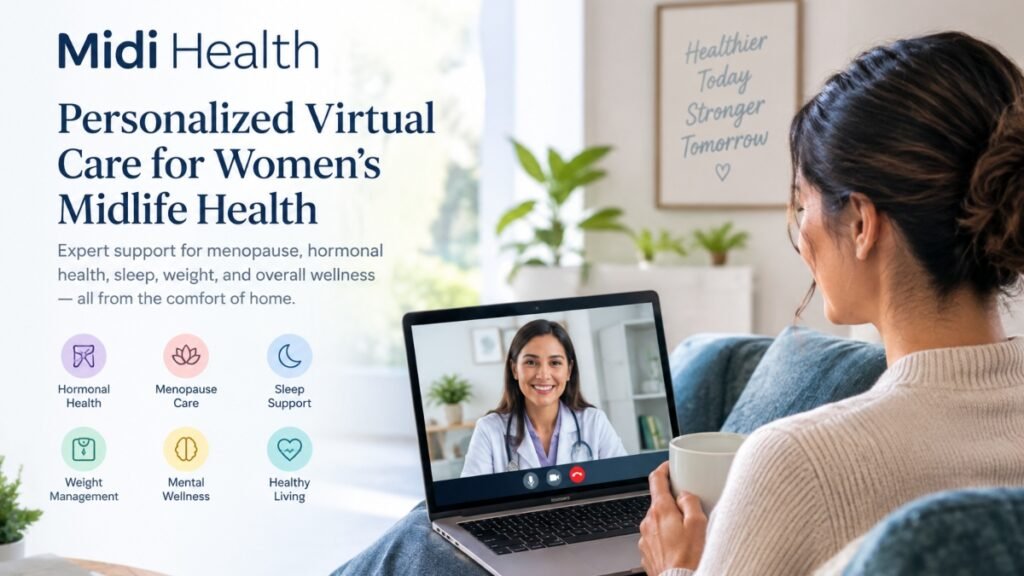
midi health
Midi Health: A New Approach to Women’s Midlife Healthcare
Healthcare is increasingly moving beyond traditional doctor’s offices. Video consultations, digital health platforms, electronic medical records, and personalized treatment plans are changing how people access medical care. One company operating in this space is Midi Health, a virtual healthcare platform focused specifically on women’s health, with an emphasis on midlife care. Midi provides virtual consultations with clinicians who specialize in women’s midlife health. Its services cover areas such as perimenopause, menopause, hormonal health, sleep, weight, mental and emotional health, and other conditions that can affect women during midlife. But what exactly is Midi Health, how does it work, and why is virtual women’s healthcare becoming an important part of the digital health landscape?
Let’s break it down.
What Is Midi Health?
Midi Health is a virtual healthcare platform designed around women’s health, particularly the health needs that can arise during midlife. The company originally focused heavily on menopause and perimenopause care. Its current services have expanded into broader areas of women’s health, including general health, weight management, sleep, mood and memory, sexual wellness, hair and skin concerns, and longevity-related care. Instead of requiring every appointment to happen in a traditional clinic, Midi allows eligible patients to meet clinicians through virtual visits. This approach is part of a larger shift toward telehealth, where technology connects patients and healthcare professionals without requiring an in-person appointment for every interaction.
Why Midlife Women’s Health Matters
Midlife can bring significant changes to the body. Hormonal changes associated with perimenopause and menopause can be accompanied by symptoms such as:
- Hot flashes and night sweats
- Sleep problems
- Changes in weight
- Mood changes
- Brain fog and forgetfulness
- Changes in menstrual cycles
- Low energy
- Joint and muscle discomfort
- Changes in sexual health
Not every woman experiences the same symptoms, and symptoms can vary considerably from person to person. That is one reason personalized healthcare has become an important part of the conversation around women’s health. Midi says its clinicians consider a patient’s symptoms, medical history, and goals when developing an individualized care plan.
How Does Midi Health Work?
The basic process is designed to take place online.
1. Book a Virtual Visit
A patient begins by arranging a virtual appointment. According to Midi, patients can complete an initial health questionnaire before meeting their clinician. This allows the clinician to review relevant information before the appointment.
2. Meet With a Clinician
The patient then has a video consultation. During the appointment, the clinician can discuss symptoms, health history, concerns, and potential next steps. Midi says its first video visit is typically 30 minutes.
3. Develop a Care Plan
After discussing the patient’s situation, the clinician can create a personalized care plan. Depending on the situation, the plan may involve lifestyle guidance, follow-up care, prescriptions, laboratory testing, or referrals for additional medical care.
4. Continue Monitoring
Healthcare does not always end after one appointment. Follow-up visits can allow clinicians and patients to discuss changes, evaluate progress, and adjust the care plan when appropriate.
What Conditions and Health Areas Does Midi Cover?
Midi has expanded beyond menopause-only care. Its current health areas include:
Hormonal & Reproductive Health
This includes care related to hormonal changes and reproductive health, including perimenopause and menopause.
Heart & Metabolic Health
Midi also lists areas such as blood pressure, cholesterol, blood sugar, and weight among the health concerns it supports.
Mental & Emotional Health
Midlife health can also involve changes in mood, sleep, memory, and emotional well-being.
Sleep
Sleep problems are another area addressed through its women’s health services.
Weight Management
Weight changes can occur during midlife, and Midi offers care related to weight management.
Hair & Skin
The platform also lists hair and skin concerns among its areas of care.
The Technology Behind Virtual Healthcare
One of the most interesting parts of Midi Health isn’t simply the medical service. It is how technology is being used to deliver that service.
A traditional healthcare journey might involve:
Patient → Clinic → Appointment → Follow-up
A virtual healthcare model can look more like:
Patient → Digital Platform → Video Consultation → Digital Care Plan → Follow-up
This doesn’t mean technology replaces healthcare professionals. Instead, technology can provide another way for patients and clinicians to communicate. Midi says it combines clinician-led care with AI-driven clinical intelligence as part of its virtual-care model. This represents a broader trend in healthcare: combining human medical expertise with digital tools.
AI and the Future of Digital Health
Artificial intelligence is becoming increasingly relevant to healthcare. AI can potentially help healthcare organizations with tasks such as:
- Organizing information
- Supporting clinical decision-making
- Identifying patterns in large datasets
- Reducing administrative workload
- Improving digital patient experiences
However, healthcare requires a particularly careful approach to AI. Medical decisions involve individual circumstances, clinical evidence, privacy, and professional responsibility. AI should therefore be understood as a technology that can support healthcare, rather than automatically replacing doctors or clinicians. Midi describes its model as combining AI-driven clinical intelligence with human clinicians.
Why Virtual Healthcare Is Becoming Important
Virtual healthcare can offer several practical advantages.
Convenience
Patients may be able to speak with a clinician without traveling to a clinic.
Accessibility
People who live far from specialized healthcare providers may have another way to access certain types of care.
Continuity
Digital platforms can make follow-up communication and ongoing care easier to organize.
Specialized Care
Midi specifically focuses on women’s midlife health, which allows its service to concentrate on a defined area of healthcare. The company says its clinicians are trained in women’s health and that it has more than 550 board-certified clinicians.
What Midi Health Does Not Replace
Virtual healthcare isn’t appropriate for every medical situation.
Some conditions require:
- Physical examinations
- Emergency treatment
- Imaging
- In-person procedures
- Specialist intervention
- Hospital care
Midi itself says that when something requires in-person or specialist care, its clinicians can refer patients to appropriate providers. This distinction is important.
Telehealth is an additional healthcare pathway, not a universal replacement for traditional medical care.
Midi Health and the Bigger Digital Health Movement
Midi Health is part of a much larger transformation happening across healthcare.
Healthcare companies are increasingly using:
- Telemedicine
- Mobile health applications
- Wearable devices
- Remote monitoring
- Artificial intelligence
- Digital medical records
- Online appointment systems
Together, these technologies are creating what is often called digital health. For consumers, the goal is increasingly to make healthcare more connected and accessible while maintaining professional medical oversight.
The Bigger Picture
Midi Health illustrates how healthcare is becoming more specialized and technology-enabled. Instead of treating women’s midlife health as a single issue, its model brings together multiple areas — from hormonal health and menopause to sleep, weight, metabolic health, and emotional well-being. The larger lesson is that digital healthcare isn’t simply about putting a doctor’s appointment on a computer screen. It is about creating a connected system in which technology can help patients communicate with clinicians, access information, receive personalized care plans, and continue their healthcare journey. For women navigating midlife health changes, that shift could make specialized care easier to access in situations where virtual care is clinically appropriate.
feedbuzzardmag Insight
Digital health is moving from simple online consultations toward connected, personalized healthcare. Midi Health is one example of this trend, combining virtual clinician visits with specialized women’s health services and technology-supported care.
The important question for the future isn’t whether technology will replace healthcare professionals. It is how effectively technology and healthcare professionals can work together to make care more accessible, personalized, and useful.
Frequently Asked Questions(FQAs).
What is Midi Health?
Midi Health is a virtual healthcare platform focused on women’s health, particularly midlife health, perimenopause, and menopause.
Is Midi Health a telehealth company?
Yes. Midi provides healthcare through virtual visits, allowing patients to meet with clinicians remotely.
What does Midi Health treat?
Its services include women’s midlife health, menopause, perimenopause, weight, sleep, mood and memory, sexual wellness, hair and skin, and other health concerns.
Does Midi Health use AI?
Midi says it combines clinician-led care with AI-driven clinical intelligence in its virtual-care model.
Can virtual healthcare replace a doctor?
No. Some medical conditions require physical examinations, procedures, emergency care, or specialist treatment. Virtual healthcare is one method of accessing care and isn’t suitable for every situation.
Final Thoughts
Midi Health shows how technology is changing the way specialized healthcare can be delivered.
Its focus on women’s midlife health demonstrates a broader movement toward personalized digital healthcare, where virtual appointments, specialized clinicians, and technology-supported care work together. As digital health continues to develop, platforms like Midi Health will be part of an important conversation about how technology can improve access to specialized healthcare while keeping clinicians at the center of medical care. This article is for informational purposes and is not medical advice. Health decisions should be discussed with a qualified healthcare professional.
Pingback: FeedBuzzard Advertise: Grow Your Brand With Digital Advertising